

Why We Built It
A dermatologist and a product lead walk into a waitlist
Benjamin Marks and Jon Friedman on the problem they kept running into, and what they built instead.
For Dermatology Practices
Dappledoc is an asynchronous telehealth platform that lets your dermatologists treat routine cases from patient photos, so your appointments go to the patients who need to be seen in person.
Designed and co-founded by

Benjamin Marks, MD, PhD
Board-certified dermatologist

Jon Friedman
Chief Design Officer at Microsoft
Now in pilot with several dermatology practices nationwide
From patient intake to physician review.
How it Works
Today you have one way to see a patient, which is in person. Dappledoc adds an online visit for your routine cases.
Patients submit photos, symptoms and history on your branded intake, and AI routes each case.
Dappledoc puts the answers and photos at the top of the screen and flags anything urgent. The dermatologist reads the case and diagnoses.
Full Clinical Control: The AI handles intake, summarizing and urgency flagging. It does not diagnose, and it does not prescribe.
A patient with a rash, acne or a follow-up doesn't need an appointment to get an answer from your dermatologist. This is what happens when they start an online visit with your practice instead.
It takes under 3 minutes on their phone.
Routine cases go online. The rest go in person.
Diagnosing and prescribing takes about 2 minutes. The patient gets a summary and Rx, and Apotheco fills and ships it nationwide.
Each case arrives with an urgency rating, and the patient is not charged.
Routine cases don't take an appointment slot, and the cases that need an exam get scheduled by urgency.
The Problem
A practice can only see so many patients a day, and until now the only way to see more has been to hire more staff. We call that the throughput trap.
36.5 days
is the average wait for a new dermatology appointment in 15 large U.S. metro areas
AMN Healthcare, 2025
25–40%
of the cases on a dermatology schedule can be treated online
Dappledoc estimate
2 min
is the review time for a routine case that takes a 10 to 15 minute slot in person
Dappledoc estimate
153%
more patient-sent portal messages per patient in 2025 than in 2020, across all specialties
JAMA, 2026
“My schedule is full for months, and many of those appointments take me 30 seconds. I look at a rash and know what it is, but the patient still drove in and sat in the waiting room. Someone who needs a biopsy waits three months for that same slot.”
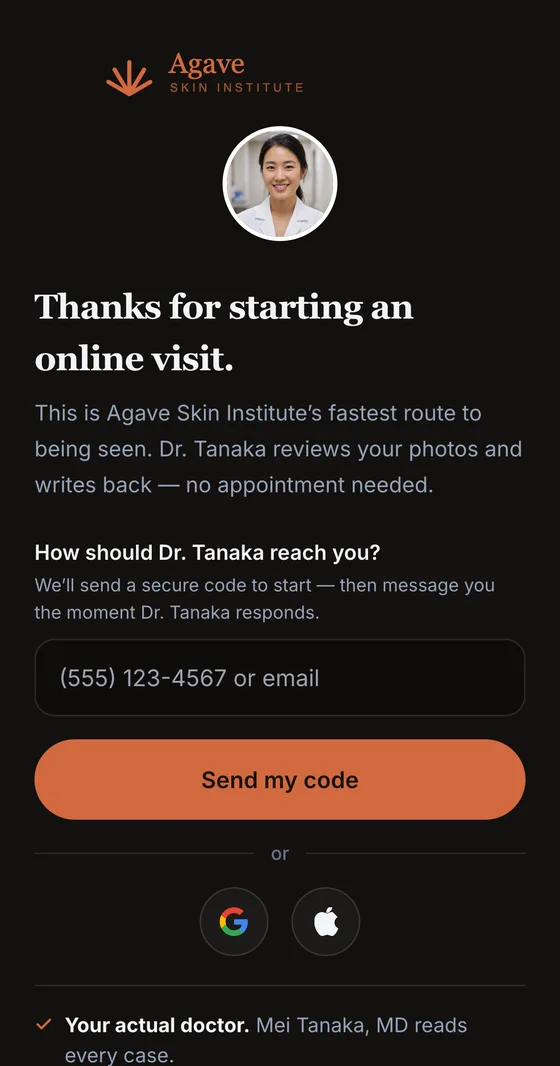
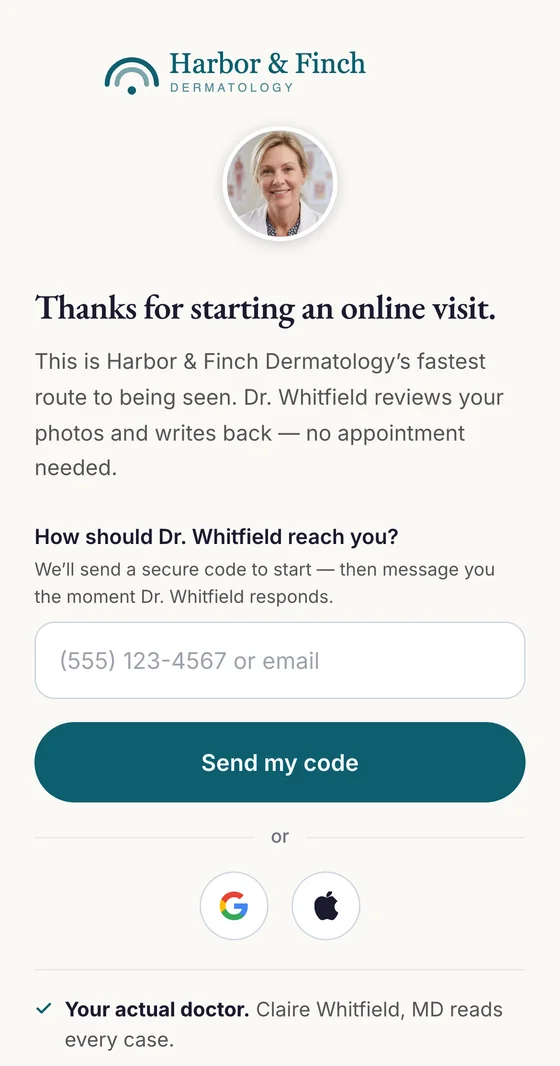
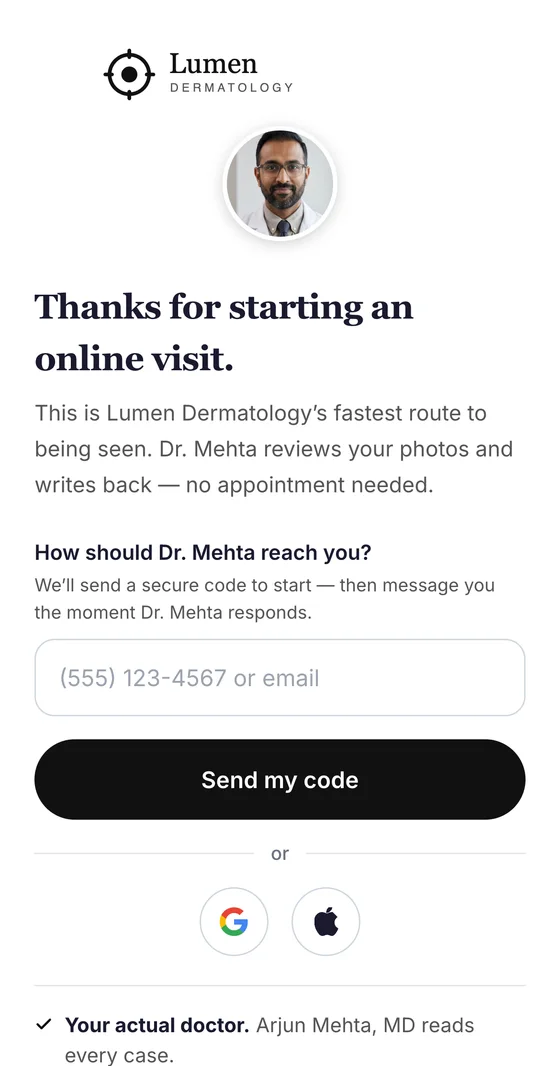
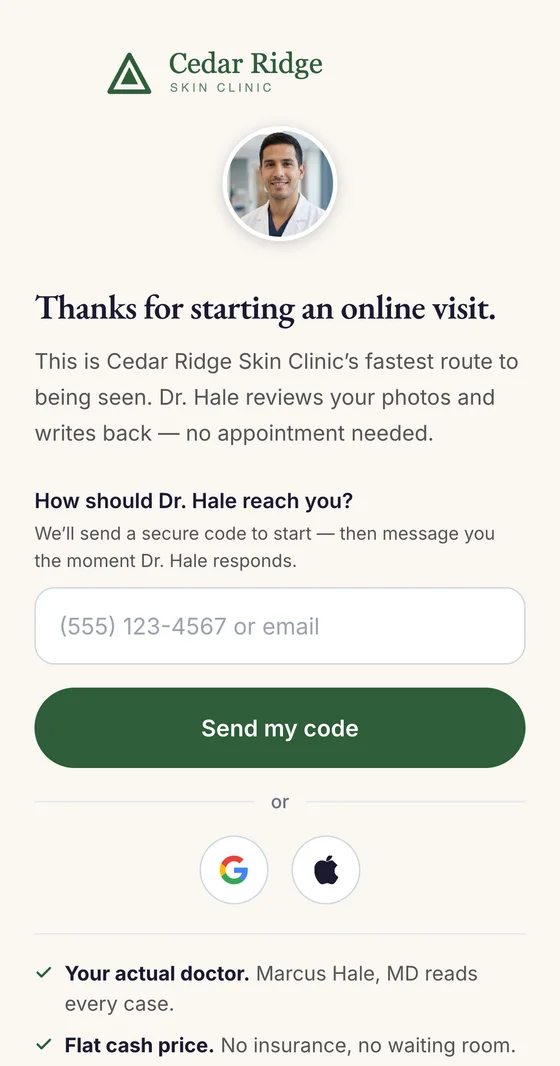
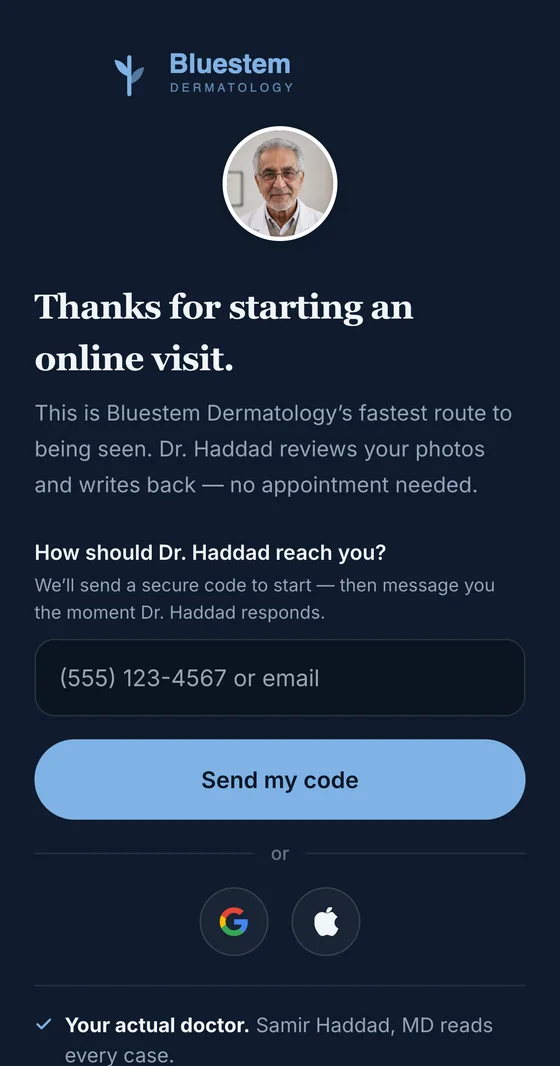
Your doctors, your patients, your EMR, your billing. Patients see your brand.
Encrypted data, signed BAAs, and audit logs from day one.
eRx goes to Apotheco, which fills and ships nationwide.
Adjust the sliders to match your practice.
Your practice
Patients you don't see today. At 0, the freed time is backfilled from your waiting list.
With Dappledoc
$567K
incremental annual revenue
Patients seen per month
+22%
patient capacity growth
420
freed slots backfilled/mo
480
async cases/mo
$0
added overhead
Same hours · 195 patients a week, up from 160
Why We Built It
Benjamin Marks and Jon Friedman on the problem they kept running into, and what they built instead.
The Team
MD, PhD · Chief Medical Officer
Yale-trained, board-certified dermatologist who sees 250+ patients a week. Built Dappledoc from clinical experience and uses it daily.
ben@dappledoc.comChief Executive Officer
Chief Design Officer at Microsoft, leading AI product experiences. 20+ years of product and technology leadership. Designed Dappledoc's platform.
jon@dappledoc.com
Chief Operating Officer
10+ years in GTM strategy, sales, and business development across software and e-commerce. Leads operations, growth and partnerships.
chad@dappledoc.com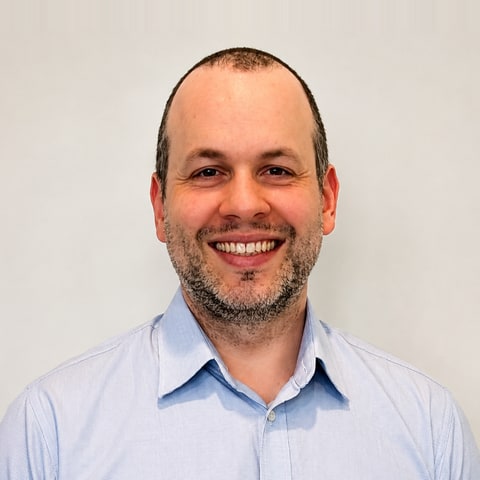
Chief Technology Officer
15+ years building distributed systems and cloud platforms. Leads Dappledoc's infrastructure, security, and the operational rigor a regulated system demands.
ari@dappledoc.comA working session on your clinic's throughput, with Ben and Jon.
Book a DemoFAQ
Dappledoc is an asynchronous telehealth platform that addresses long wait times in dermatology and gets clinicians paid for their async work. Patients send photos of a skin concern from their phone, AI triage sorts the cases, and the practice's own dermatologists treat the routine ones online. It was designed and co-founded by Dr. Benjamin Marks, a Yale-trained, board-certified dermatologist, and Jon Friedman, the chief design officer at Microsoft.
No. Dappledoc's AI sorts and summarizes cases and flags anything urgent. A dermatologist at your practice makes every diagnosis and writes every prescription.
Many online dermatology companies sell directly to patients and employ their own doctors, so they compete with local practices for patients. Dappledoc sells to the practice. Patients see the practice's name, are treated by its dermatologists and pay the practice directly.
Routine cases like rashes, acne and follow-ups can be treated online. Biopsies, procedures and anything the AI or the dermatologist flags as needing an exam go to an in-person visit.
In-person visits are billed to insurance, exactly as they are today. For online cases, patients pay your practice a platform access fee, at a price your practice sets.
The patient is not charged. The case goes to your front desk with an urgency rating, the reason it needs an exam and the patient's contact details, so your office knows who to call first.
Dappledoc is built to HIPAA requirements, and we sign a business associate agreement with every practice. Patient data is encrypted, each practice's data is kept separate from every other practice's, and audit logs are kept from day one.
No. Dappledoc runs in the browser on a phone or computer. Patients sign in with a one-time code sent by text or email, or with Google or Apple.
You add your providers, set your price for online cases, add your logo and colors, and share your link with patients. There is nothing to install.
Dappledoc is in pilot with several dermatology practices nationwide and is adding more. Practices can request a demo.